
How Sports Are Finding New Norms
Abby Ross, CEO, The Resiliency Company
As I write this, a heatwave is making its way through the midwest, impacting over 230M people. This is happening as all eyes are on the US's weather for the World Cup. I’ve been enjoying watching this year – and not just because the US has been winning. One of the hazards of my job is that I see people, industries, and systems adapting to the new climate everywhere. In the case of the World Cup, the mandatory “hydration breaks” have led to a few friendly debates with strangers in pubs about the implications of extreme heat on sport and society at large.
This is the first year that FIFA, the sports governing body, has introduced mandatory three-minute hydration breaks midway through both halves of every game, regardless of the actual game-day temperature or whether the stadium is climate-controlled. Although some health experts think FIFA has not gone far enough, with games in stadiums in Miami, Houston, and Mexico City, this protocol is to protect players from heat-related stress.
What I’ve realized is that those pub-based friendly debates are as much about changing norms as they are about player safety. Opponents to the hydration breaks argue that it changes the rhythm of the game and fundamentally alters strategy. That might be true. But extreme heat is already changing the game. Higher temperatures require different conditioning, game tempo, and player management strategies. The hydration breaks are just the next step.
In essence, the norms of the game are being changed to make it resilient to the changed and changing weather – precisely what this newsletter (and our work at The Resiliency Company) is about. FIFA is intervening to protect players and, as a result, making the game resilient.
Sports are especially adept at adapting. They need their athletes to be well enough to compete and their spectators willing to watch. I got to experience the confluence of these things when I went to the 2025 Cincinnati Open. It’s the last tennis tournament before the US Open, which is final of the four ‘Grand Slam’ tennis events annually. As a result, most of the top ranked players compete in the Cincinnati Open as a way to prepare for the US Open.
Hosted in mid-August, it is always a painful blend of midwest sticky humid and hot. The tournament is hosted at the Lindner Family Tennis Center, where it’s been since 1979, and over the past almost-five decades, summer playing conditions have become noticeably hotter. What in the 1980s were typically low-to-mid-80°F afternoons are now often upper-80s to low-90s, with much higher heat indices and court surface temperatures, increasing heat stress for athletes and reducing comfort for spectators. My friends and I actively keep track of which seats are shaded for specific matches.
Last year, The Lindner Center unveiled a $260M renovation and I noticed several features that deal with adapting to the conditions of the changing heat. The communal area, known as The Commons, now has shade to help keep spectators cool and lighter concrete has replaced black asphalt to mitigate previous “heat island” effects.
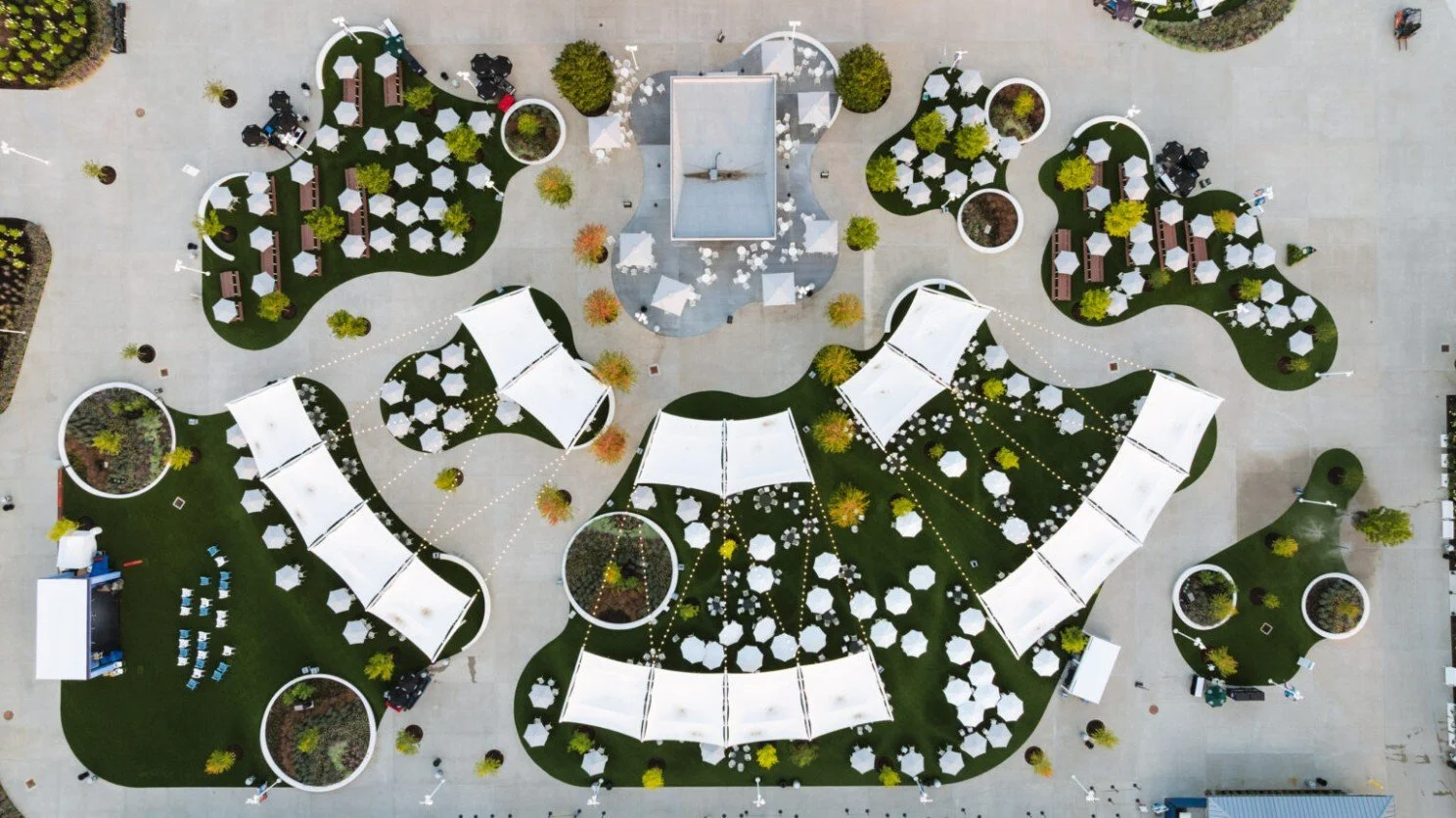
The Commons is a relaxing area with park-like greenery and shade for fans.
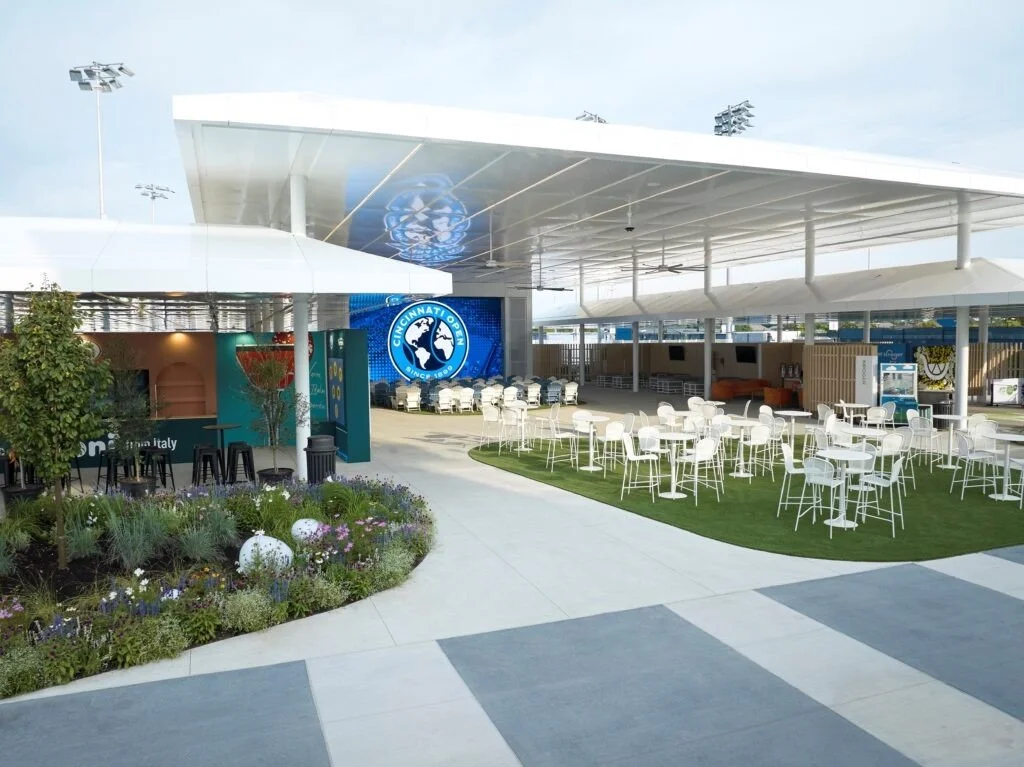
The Pavilion is a permanent, expansive shade canopy.
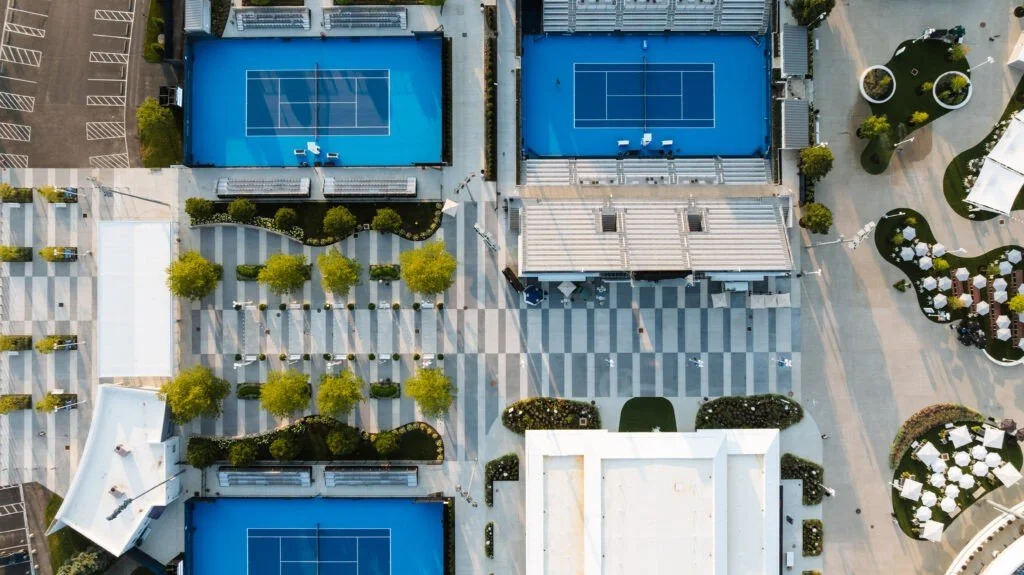
The blacktop asphalt around campus was replaced with light concrete.
Even with these infrastructure investments, heat still took the headlines at the tournament when Jannik Sinner retired in the final match when he was down 0-5 to Carlos Alcaraz due to illness. This story was replayed when he lost in the 2nd round of the French Open this year during a very hot match. As a result, the ATP has introduced a new heat rule to protect players. A version of football’s hydration breaks, they’re set to change the norms of the game – more fodder for those pub-based friendly debates but clearly the right thing for our world of changing weather.
