
Building a more resilient future
The Resiliency Company mobilizes the organizations and capital required to shift minds and markets toward resilient infrastructure.

The Resiliency Company’s mission is to make resiliency the norm for physical infrastructure in the United States, so communities can thrive amidst the changed and changing weather and extreme climate events.
The Resiliency Company envisions a world in which communities, families, and businesses in the United States can thrive amidst accelerating extreme weather and natural disasters.
We envision a future where communities rebuild with resilience, so that the next disaster is less destructive for everyone and where resiliency is the norm and standard of business - a core tenet of how we design and build infrastructure and systems.
We define resiliency as the ability of infrastructure—the physical, economic, and social systems central to the functioning of an economy and a society—to withstand extreme weather and climate disasters and recover from them quickly.
There are various sectors in the U.S., that all communities rely on for quality of life, that we believe are points of entry for increased resilience focus. Telling better stories, creating conditions for success, and moving from funding to financing is how we approach a set of problems that is $2 trillion in size globally.
The Resiliency Company is a parent organization that mobilizes the funding, policies, and innovation required to decrease the financial impact of climate disasters and hazards.
We’re not a think tank - we’re a do tank. Our approach is to encourage organizations and experts at the intersection of climate science, adaptation, finance, and policy to come together to ensure our country’s infrastructure is resilient to disasters and hazards.
To enable communities to live safely amidst a time of accelerating weather hazards and natural disasters, we need to mobilize investment into critical infrastructure that prioritizes resiliency as a core tenet of how we build.
Our role in the ecosystem
Make the case for resiliency
Research
Trends, news, and storytelling
Quantifying the ROI of resilience investments
Education
Resilient housing
Resilient shared physical infrastructure
Insurance
Real estate & construction
Create conditions for success
Our Partners

Climate literacy to help people and companies adapt to climate change

A national platform to build resilient physical infrastructure for stronger, safer communities

Empowering Los Angeles communities to rebuild safer, stronger, and smarter after the Eaton and Palisades fires

A nonprofit Donor Advised Fund that that has moved $5B to nonprofits

Affiliated publication to help decision makers understand the risks and impacts from climate hazards

Reimagining insurance as a force for social and environmental good

Inspiring a new architectural era that merges timeless design with resilience

Financial platform for resilient home lending that helps homeowners navigate the rebuilding journey


a hazard meets a vulnerability.
The defining challenge of today
From the 1980s until the early 2000s, a $1 billion disaster (including CPI adjustment to 2023) hit the U.S. about every 73 days (meaning roughly 5 disasters per year). As of 2024, a $1 billion disaster hits roughly every 18 days. By 2030, a $1 billion disaster could hit the U.S. every week.
Annual Number of Billion-Dollar Disasters, 1980-2024

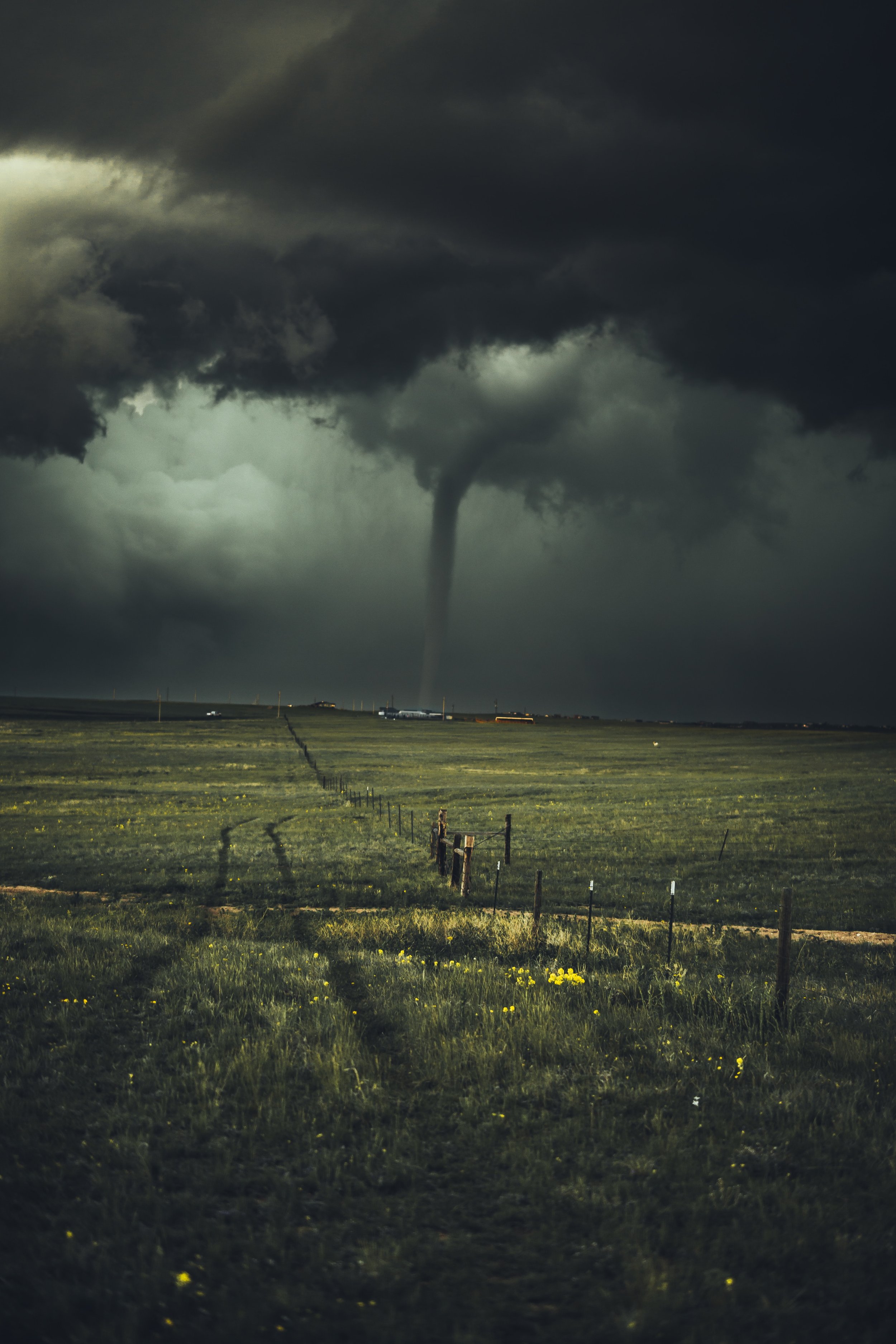
As more frequent extreme weather and climate disasters destroy lives and livelihoods, the associated costs continue to rapidly increase. Since 1980, the U.S. has averaged eight “billion-dollar disasters" every year. In 2024, however, the U.S. experienced 27 such disasters, collectively costing the U.S. more than $182 billion. (3)
If we want to reverse the accelerating costs of extreme weather and climate driven disasters, we must adapt our country’s infrastructure to be resilient instead of just rebuilding the same way we always have.
The U.S. faces a massive financing gap in the adaptation capital required to fortify our country’s infrastructure. In the landscape of climate financing in 2022, adaptation accounted for only 5% of total global climate finance. And according to the World Economic Forum, the total climate adaptation and resilience financing deployed amounts to only 20-30% of projected annual Adaptation and Resilience financing needs.
Meanwhile, most of the resources deployed following a disaster are allocated to either short-term relief or rebuilding “back to normal,” leaving insufficient funding to make the necessary upfront investments to build with resilience so that the next disaster is less destructive.
But after a disaster, there’s an opportunity to rebuild with resilience in ways that are less expensive than home retrofits. This is because it can be less costly to rebuild from the ground up to new standards than to retrofit existing structures, one by one.
For example, to rebuild an entire home to meet the IBHS standard of a Wildfire Prepared Home, it can cost between $35,000 and $60,000 more than it would cost to rebuild to current building codes. Meanwhile, to retrofit an existing structure, costs often start at $150,000.
As the rate of extreme weather and climate disasters in the U.S. accelerates, we must imagine better financing strategies in order to catalyze capital toward adaptation and resilience.